At Related, we believe that reliable data is the foundation for good decision-making. Therefore, quantitative research is a big part of our framework, whether we are investigating traveller profiles or diving into how destinations are performing. Quantitative research provides the structure and scale needed to translate large amounts of data into meaningful insights.
Let us give you an example.
For example, to strengthen our understanding of travellers from the Baltics, we launched an annual survey across Latvia, Lithuania, and Estonia in 2024. This initiative allows us to build a strong and comparable dataset year after year.
Each wave of the survey is comprised of responses from hundreds of participants in each country, and we apply weighing by region of residence, age, and gender to ensure the results reflect the population as accurately as possible.
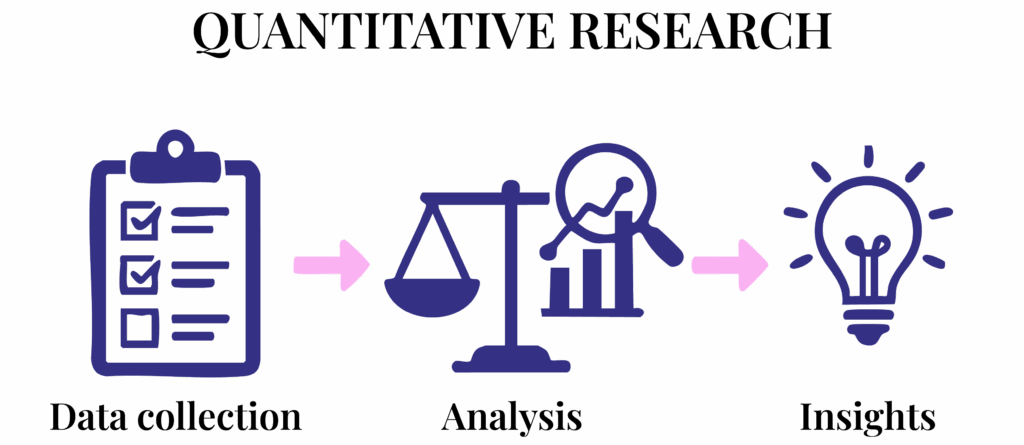
The surveys give us the opportunity to explore what drives Baltic travel behaviour in detail, ranging from motivations and planning habits to destination perceptions and experiences. Crucially, because the research is conducted annually, we can go beyond a snapshot in time. The year-on-year insights enable us to closely monitor changes in attitudes, preferences, and behaviours, helping us understand not just how Baltic travellers think today, but how their preferences and choices evolve. We apply the same rigorous, year-on-year methodology when studying Nordic travellers, allowing us to track evolving behaviours across both regions.
When conducting quantitative research, it is easy to focus on the number of respondents, and this is a crucial aspect; however, it is equally important to ask respondents the right questions. At Related, we spend a significant amount of time perfecting our questions, as even small changes in wording can alter the meaning.
Using precise and carefully considered wording ensures that the nuances of interest are actually what is captured in the responses. Because – assuming that the right respondents and questions have been asked – quantitative research has two important qualities: its ability to reveal the larger picture and its versatility.
Ability to reveal the larger picture:
With enough responses, we gain a solid foundation of “hard data” that reliably reflects the real attitudes and behaviours of our population of interest. This enables us to quantify travel behaviour by aggregating individual decisions into measurable patterns and trends, giving us a clearer understanding of the market as a whole.
Versatility:
Quantitative research allows us to examine our data from multiple angles. When sample sizes are large enough, the data can be segmented in many meaningful ways across, for example, demographics, travel motivations, or destination preferences. This allows us to zoom in on specific audiences, such as Baltic travellers who prioritise experiences in nature when on holiday. This enables us to provide precise insights, even on highly specific populations.
For us, quantitative research is about understanding people at scale. It is about seeing where a market is today and where it is headed next.